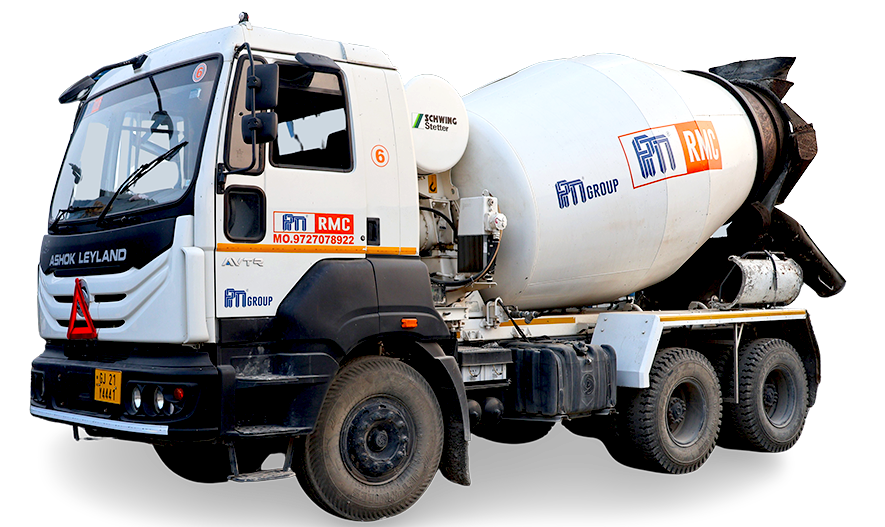

Concrete starts losing workability from the moment water meets cement at the batching plant. Everything that happens after that, including the drive to site, a jam on the ring road, a 40°C afternoon, or a pump that is not ready, eats into the working life of the mix. That is why RMC delivery time is not just a logistics detail. It is a quality factor that project managers, contractors, and site supervisors can plan for and control. This guide explains how transit, traffic and weather change concrete in the drum, and how to plan a pour so that every truck arrives usable.
What Happens to Concrete Inside the Truck
A transit mixer keeps concrete moving, but it cannot stop hydration. As time passes, the mix stiffens, slump drops and the concrete becomes harder to pump, place and compact. Heat and long waits speed this up.
IS 4926, the Indian Standard for ready mixed concrete, generally expects concrete to be fully discharged within two hours of water being added at the plant, unless the supplier and buyer agree on a different limit for a specific mix. In practice, that two-hour window covers loading, ready mix concrete transit time, waiting at the gate and the full discharge at site. A truck that spends 50 minutes on the road and 60 minutes waiting for the pump has very little margin left.
How Transit Time, Traffic and Weather Affect RMC Delivery Time
Each factor below affects the concrete differently, and each has a practical fix that can be agreed before the pour.
| Factor | Effect on the Concrete | How to Plan for It |
|---|---|---|
| Long transit distance | Slump loss and shorter working time on arrival | Choose a nearby plant or agree a retarding admixture in the mix design |
| Peak-hour traffic | Irregular arrivals, gaps between trucks and cold joints | Schedule large pours early morning or at night, and allow buffer trucks |
| Hot weather | Faster setting, plastic shrinkage cracks and higher water demand | Pour in cooler hours, use chilled water or ice at the plant, and cure early |
| Rain | Diluted surface, weak top layer and muddy site access | Keep covers ready, firm up access roads and check the forecast before confirming |
| Waiting at site | Concrete ages in the drum even when the road was clear | Confirm formwork, reinforcement and pump readiness before the first truck leaves |
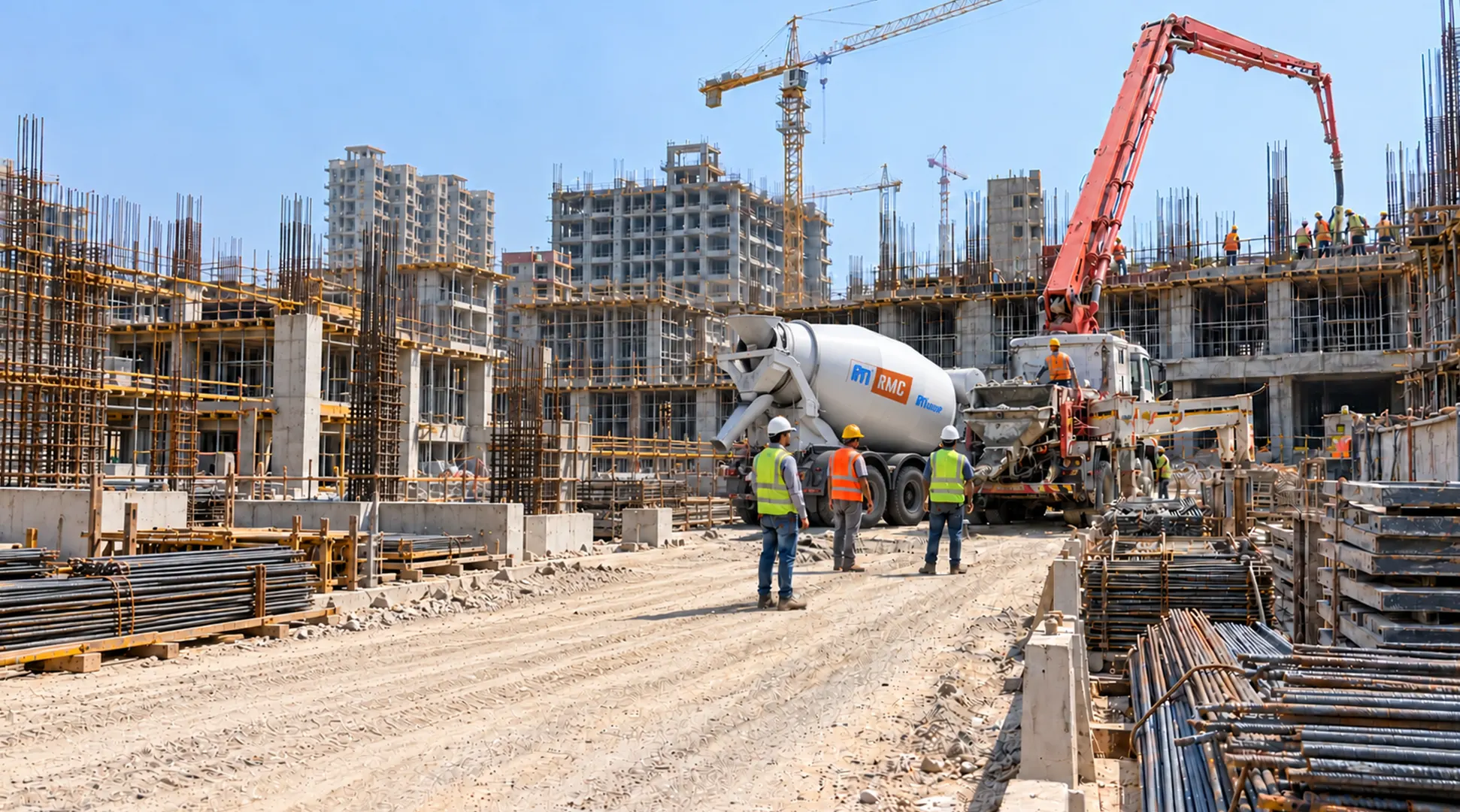
RMC transportation inside a growing city is rarely a straight drive. Surat's peak-hour congestion, ongoing infrastructure work and heavy-vehicle entry restrictions in parts of the city can stretch a 30-minute trip to well over an hour. The real risk is uneven spacing: bunched trucks wait too long at site, while gaps let the previous layer set before the next arrives, creating a cold joint. Planning slab and raft pours for early morning or night avoids most of this.
RMC in Hot Weather India: Why Summer Pours Need Extra Care
RMC in hot weather India is one of the most common causes of site complaints from March to June. High air temperature raises the temperature of the concrete itself, which speeds up setting and slump loss. Many project specifications cap concrete temperature at placing, often around 30 to 32°C, and IS 7861 (Part 1) gives guidance on hot weather concreting. A good supplier can lower the mix temperature with chilled water or ice and adjust the admixture dose. On site, start curing as early as the surface allows.
Planning Concrete Delivery Time for a Large Pour
The most useful planning tool is a simple truck cycle calculation. Work out how fast the pump or crew can place concrete, then divide that by how much a truck can deliver in one round trip.
For example, if the pump places 30 cubic metres an hour and each truck carries 6 cubic metres, you need 5 truckloads an hour. If one round trip from plant to site and back takes 90 minutes, each truck can make two-thirds of a trip per hour, so you need at least 8 trucks running to avoid gaps. Add one or two extra trucks when the route passes through heavy traffic.
Agreeing on a concrete delivery time with the supplier in this way changes the conversation from "send concrete at 7 am" to a fixed dispatch rhythm that both sides can track.
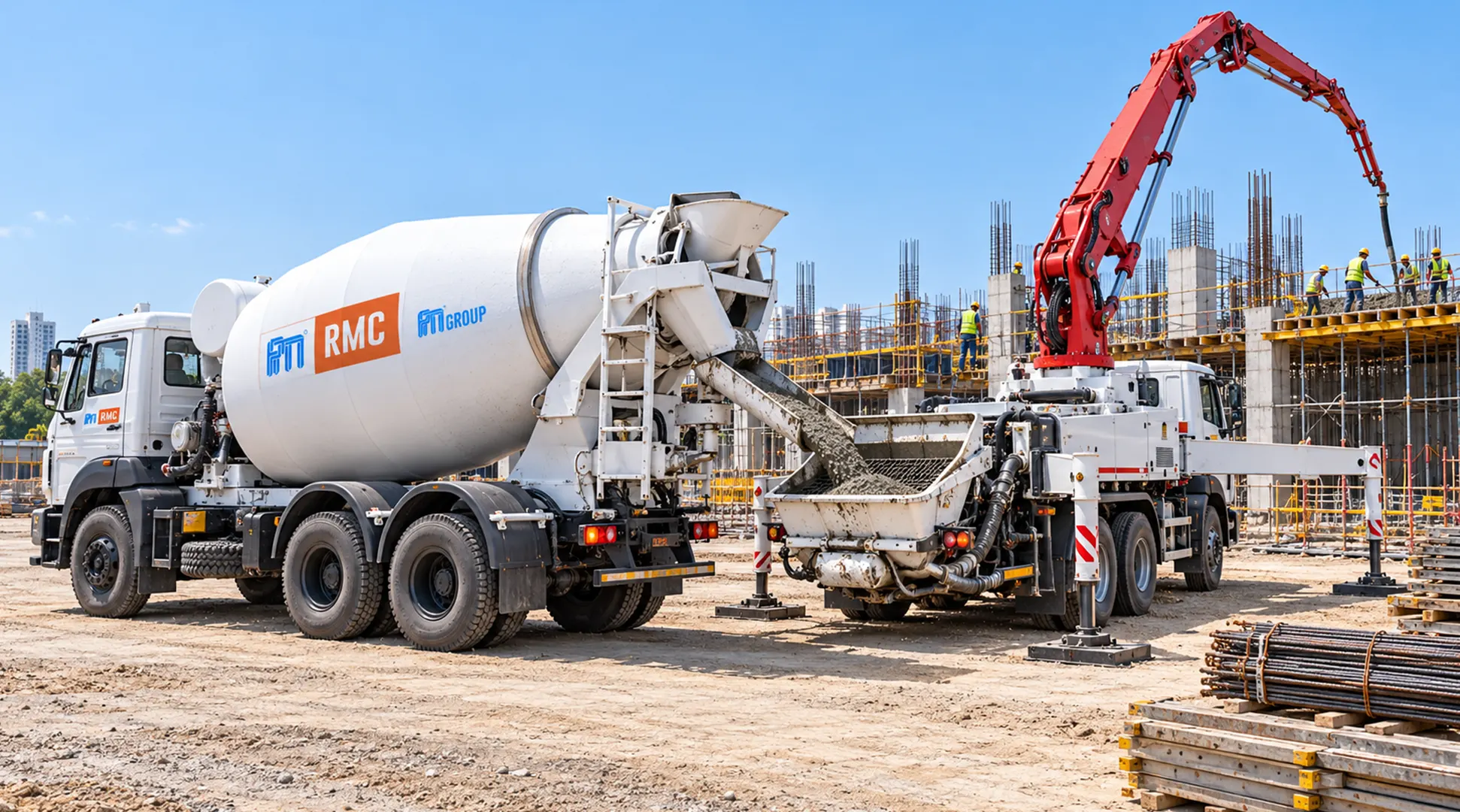
Pre-Pour Checklist with Your RMC Supplier
A short call the day before a major pour prevents most delivery problems. Confirm the following:
- Grade, slump at site, admixture type, and any retarder needed for the distance.
- Total quantity, pour rate, start time, and the gap between trucks.
- Site access route, gate timing, and any police or society restrictions.
- Pump booking, a backup plan for breakdowns, and a named contact on both sides.
- Hot weather or rain measures, including concrete temperature limits.
Handling a Concrete Truck Delay on Site
Even with good planning, a concrete truck delay will happen sooner or later. The first step is to check the batching time printed on the delivery ticket, so you know exactly how old the concrete is. If it is close to the agreed time limit or the slump has clearly dropped, do not let the operator add water to make it flow. Extra water raises the water cement ratio and directly reduces strength. Where the mix design allows it, a measured dose of superplasticiser added under supervision is the safer option. If the concrete is beyond its working life, reject it and record the reason.
How PM RMC Supports Planned Pours
PM RMC is part of PM Group, which has almost three decades of experience in construction materials across South Gujarat. Its RMC operation uses ERP-based tracking from production to dispatch, so batching time and dispatch details are recorded for every load. Aggregates come from Patel Aggregates & Sand within the same group, so material is controlled from crusher to transit mixer.
Conclusion
Good concrete can still fail on site if it arrives late, sits too long or is poured in the wrong conditions. Treating RMC delivery time as part of the pour plan, alongside traffic, weather and site readiness, protects strength, finish and schedule.
Planning a slab, raft, or large pour in Surat or South Gujarat? Share your quantity, location, and preferred pour time with PM RMC, and our team will help you plan dispatch, truck cycles, and mix adjustments for the conditions.
Project Enquiry
If you are looking for dependable paving solutions for your next construction or infrastructure project, connect with PM Group to discuss your project requirements and identify a suitable paving solution.
Talk to Our Team