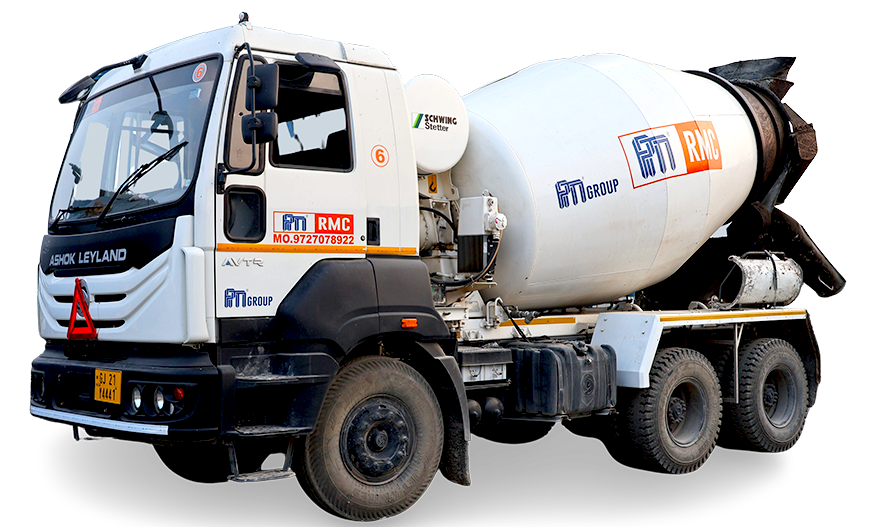
Two trucks of 20 mm aggregate can pass the same sieve analysis and still behave very differently at the batching plant. One pumps cleanly and hits its design grade. The other looks harsh in the drum, needs extra water to hold slump, and gives cube results that drift. The difference is usually particle shape. That is why engineers, RMC teams, and consultants now look closely at cubical aggregates before approving cubical aggregates for concrete before they approve a material source. This guide explains how aggregate shape in concrete affects strength, workability and cement consumption, and what to check before you sign off on a supplier.
What Are Cubical Aggregates?
Cubical aggregates are crushed stone particles whose length, width and thickness are roughly equal, with sharp, fractured faces on every side. They are not a different rock type; they are the result of controlled, multi-stage crushing.
The opposite are flaky and elongated particles. IS 2386 (Part 1) defines a flaky particle as one whose least dimension is less than 0.6 times its mean sieve size, and an elongated particle as one whose greatest dimension is more than 1.8 times its mean sieve size. IS 383:2016 limits the combined flakiness and elongation index of coarse aggregate for concrete to 40 percent, and many RMC mix designs work to a tighter internal limit.
Flaky Aggregate vs Cubical Aggregate
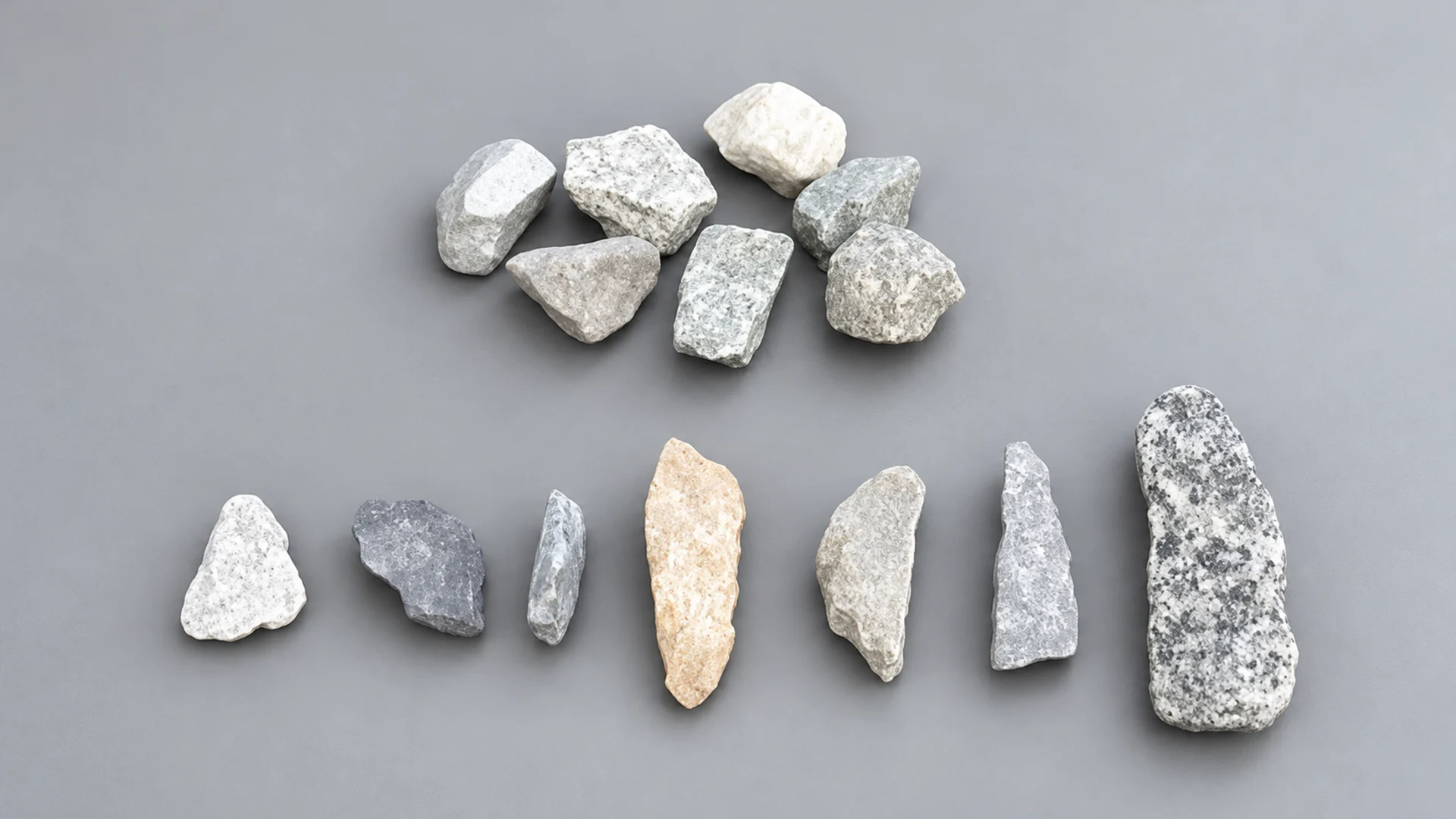
| Property | Flaky or Elongated Aggregate | Cubical Aggregate |
|---|---|---|
| Particle geometry | Thin, flat or needle-shaped | Three dimensions roughly equal |
| Packing and voids | Particles bridge gaps, leaving higher voids | Particles nest closely, leaving lower voids |
| Cement paste demand | Higher, to fill voids and coat extra surface area | Lower for the same strength and slump |
| Workability at the same water content | Harsh and prone to segregation | Flows, compacts and finishes more easily |
| Behaviour under load | Can snap in bending and form weak planes | Carries load through the full particle |
| Batch-to-batch consistency | Cube results vary more | Cube results sit closer to the design grade |
With flaky stone, each of these gaps gets corrected elsewhere in the mix, usually with more cement, water or admixture.
Why Aggregate Shape in Concrete Affects Performance
Aggregate occupies roughly 60 to 75 percent of concrete volume, so its geometry decides how a mix packs, flows and carries load. Most source approvals check grading, silt and crushing value, but a grading report says nothing about whether particles are cubes or slivers. The cubical aggregate benefits below are where that gap shows up on site.
Higher Strength and More Predictable Cube Results
Flaky particles are weak in bending and can break under load. They also settle flat during compaction, trapping bleed water underneath and creating weak planes. Cubical particles bond on all faces and carry load through their full body, so cube strength lands where the mix design says it should, with less variation between batches.
Better Aggregate Workability at the Same Water Content
Aggregate workability depends heavily on surface area and particle interlock. Flaky stone carries more surface area for its volume and tends to lock against itself, so the mix feels harsh. The usual site fix is extra water, which raises the water cement ratio and cuts strength without any record. Cubical aggregate reaches target slump at the designed water content and is less likely to segregate or block a pump line.
Lower Cement Consumption
Cubical particles sit against each other with little wasted space. Flat and needle-shaped particles bridge across gaps and leave pockets of void, and every void has to be filled with cement paste. Flaky aggregate pushes the mix toward more cement just to reach the same workability and strength. Across thousands of cubic metres, that extra paste is a real cost, and it adds heat of hydration and shrinkage cracking risk.
How Crushed Stone Shape Is Controlled at the Plant
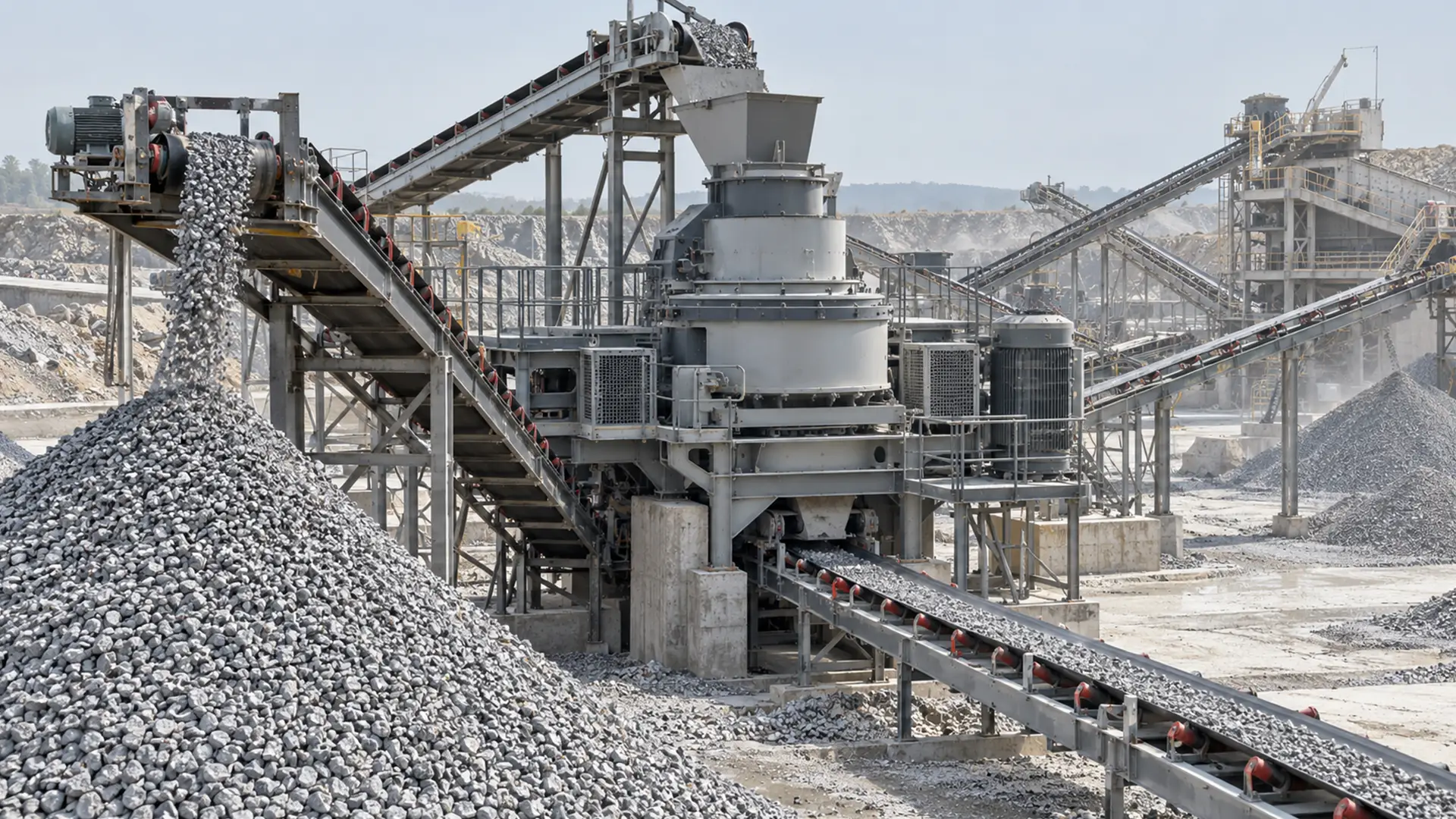
Crushed stone shape is not decided by the quarry or the stockpile. It is decided by how the rock is broken. Compression-only crushing splits rock along its weaker planes and leaves more flaky particles.
At Patel Aggregates & Sand, the aggregates division of PM Group, rock passes through three crushing stages. A jaw crusher reduces boulders to a controlled feed size. A cone crusher handles secondary crushing at a fixed setting for consistent sizing. A Vertical Shaft Impactor (VSI) finishes the job, using rock-on-rock impact to knock off weak edges and slivers and leave cubical particles behind. PM Group commissioned the first Metso crushing plant in Gujarat in 2008, and the facility has a crushing capacity of 600 tonnes per hour, supported by in-house testing. The same aggregate also feeds PM RMC, so its effect on slump, pumping and cube results is tested in the group's own concrete every day.
How to Check Cubical Aggregates for Concrete Before Approving a Source
A short checklist separates a well-shaped source from one that only looks acceptable in the truck:
- Ask for a recent flakiness and elongation index report for each size, and compare it with your project limit, not only with IS 383.
- Confirm whether a VSI is part of the crushing line. Without a final impact stage, particle shape is whatever the cone crusher left behind.
- Pick up a handful of 20 mm from the stockpile and look at it in daylight.
- Run a trial mix at your target slump and record the water and admixture it needs.
- Request test reports spread across several months rather than a single sample.
A source that clears all five checks is one you can confidently build a mix design around.
Conclusion
Grading tells you the size of the stone. Shape tells you how that stone will behave in the mix. Choosing cubical aggregates for concrete gives lower voids, better workability, more predictable strength and a leaner cement content. Make particle shape part of every source approval.
Project Enquiry
If you are looking for dependable paving solutions for your next construction or infrastructure project, connect with PM Group to discuss your project requirements and identify a suitable paving solution.
Talk to Our Team