A truck of manufactured sand unloads in ten minutes. If it is dusty, badly graded or full of clay, the problem stays on site for weeks as cracked plaster, harsh concrete and unexplained cube results. Knowing how to check M sand quality at the gate gives site teams the chance to reject a bad load before it goes into the structure. This guide covers quick site tests, what the results mean against IS 383, and the documents to ask for before booking deliveries.
Why M Sand Quality Varies from Load to Load
Manufactured sand is produced by crushing rock, so its quality depends almost entirely on how the plant crushes, screens and controls its output. A plant with a Vertical Shaft Impactor (VSI) and proper screening produces cubical, well-graded particles. A plant that simply screens crusher dust delivers sand that looks similar in the truck but behaves very differently in the mix.
The usual problems are excess dust, clay from quarry overburden, flaky particles, oversize grit and grading that swings between trucks.
M Sand IS 383 Requirements in Plain Terms
IS 383:2016 covers aggregates for concrete, including manufactured sand. Three of its requirements matter most at the delivery point.
The first is grading. Fine aggregate is classified into Zones I to IV based on the percentage passing each sieve, with Zone II the most common choice for structural concrete. The second is the material finer than 75 microns. The standard allows manufactured sand more of these fines than natural sand, because they are crushed stone rather than clay, but check the exact limit against your project specification. The third is deleterious material, such as clay lumps, mica, shale and organic matter.
Good quality M sand meets all three consistently, not just in the sample that was tested when the supplier was approved.
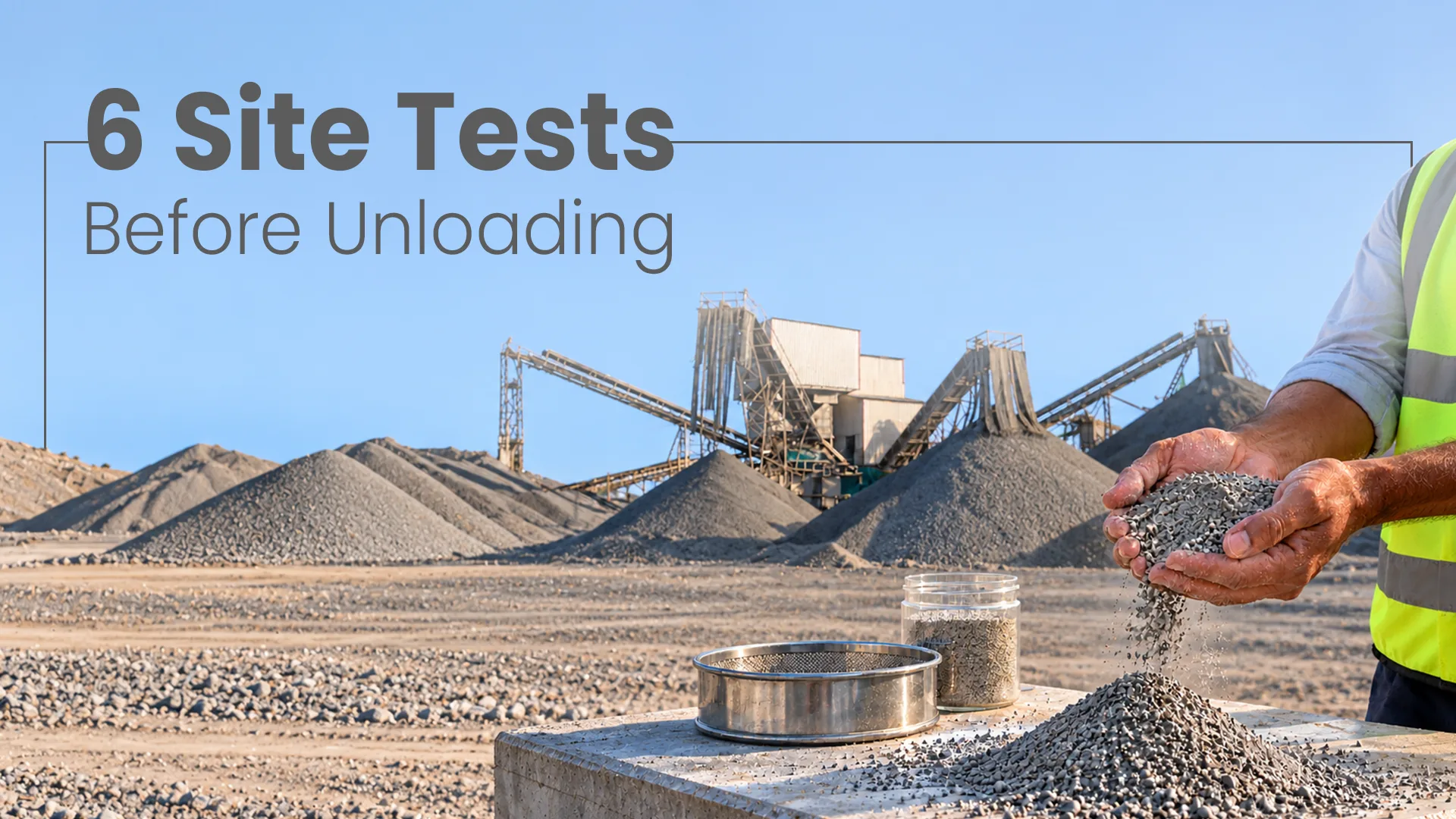
How to Check M Sand Quality: Six Site Tests
These do not replace a laboratory report, but they catch most bad loads within minutes. Sample from at least three points in the heap, not just the surface.
| Site Test | How to Do It | Warning Sign |
|---|---|---|
| Visual check | Spread a sample on a clean sheet in daylight | Patches of different colour, roots, plastic, or lumps that do not crumble |
| Palm rub test | Rub a damp handful between your palms, then clap your hands | A sticky brown film that stays on the skin points to clay |
| Silt jar test | Fill a measuring jar with sand and salt water, shake well and let it settle for three hours | A thick, muddy layer on top of the sand |
| Field sieve check | Pass a weighed sample through 4.75 mm, 600 micron and 150 micron sieves | Oversize grit, or a zone that does not match the delivery challan |
| Squeeze test | Squeeze a handful firmly and open your fist | Water drips out, or the ball holds its shape like wet soil |
| Particle shape | Look closely at the grains under a hand lens or in good light | Thin, flaky or needle-like particles instead of rounded, cubical grains |
Reading the M Sand and Silt Test Correctly
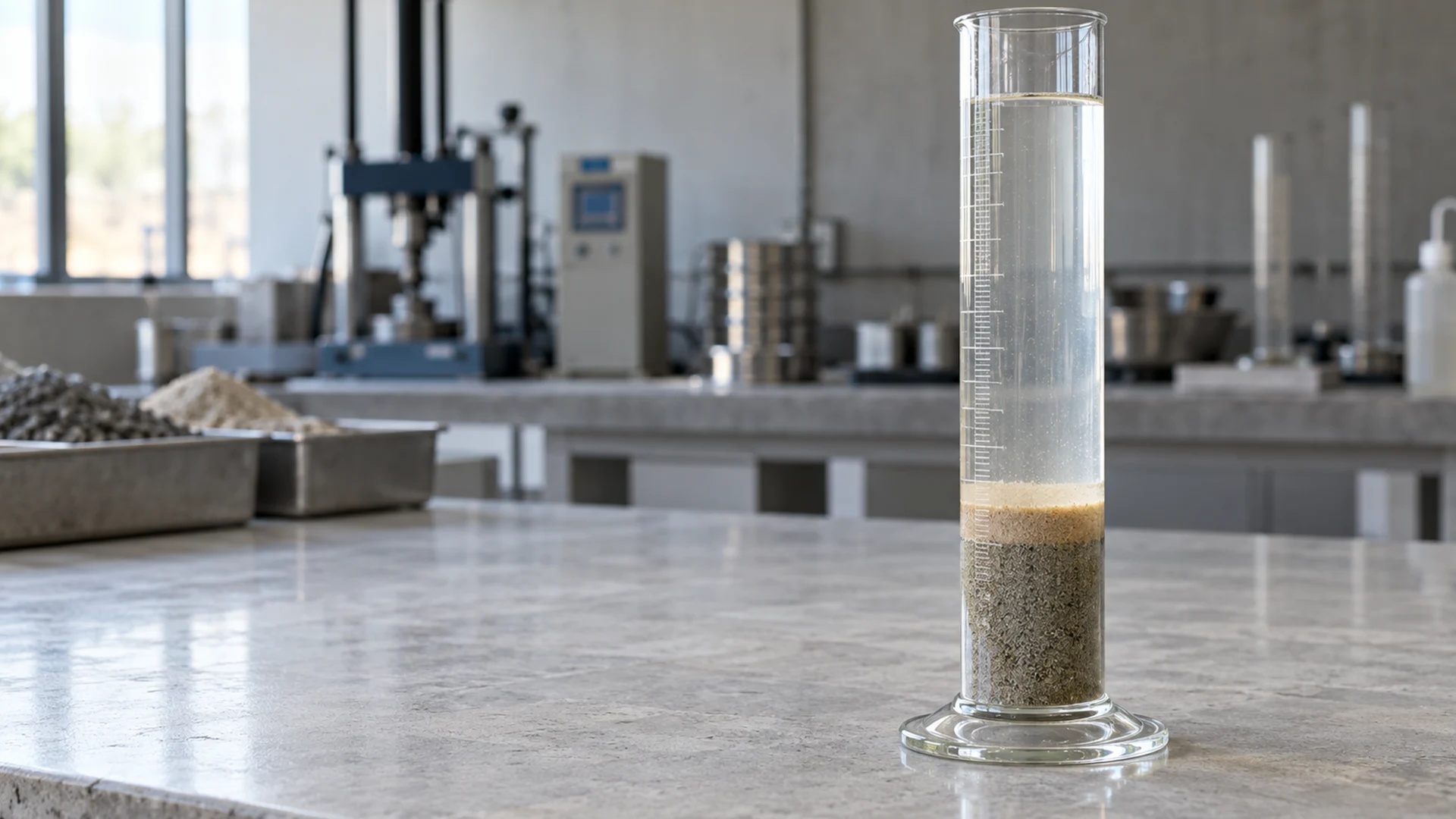
The M sand silt test is the most useful field check and the most often misread. To run it, fill a 250 ml measuring cylinder with sand up to the 100 ml mark, add a 1 percent salt solution up to 150 ml, shake and leave it for three hours. Divide the height of the fine layer by the sand height below it to get the percentage by volume.
With river sand, that layer is mostly clay and silt. With manufactured sand, much of it is stone dust, which settles in the same place but is far less harmful. So a thick layer means investigate, not reject. If it feels sticky or stains your fingers, it contains clay and the load should be held. If it feels gritty and brushes off, ask for a laboratory result on material finer than 75 microns, and a methylene blue test if clay is suspected.
Why Moisture Matters at Delivery
Wet sand affects billing and batching. Sold by weight, you pay for water. Measured by volume, damp sand bulks and looks like more than it is. Record the moisture and adjust batching water to protect the water cement ratio.
M Sand Testing at Site vs Laboratory Testing

M sand testing at site answers one question: should this truck be unloaded? A full M sand quality test in a laboratory confirms IS 383 compliance through sieve analysis, fineness modulus, fines content, specific gravity, water absorption and soundness. Before booking regular deliveries, ask your supplier for the following:
- A recent sieve analysis showing the grading zone and fineness modulus.
- Test results for material finer than 75 microns and for deleterious materials.
- Water absorption and specific gravity values for the mix designer.
- Details of the crushing process, including whether a VSI is used for the final stage.
- Test reports from several months, not a single sample, to show consistency.
When to Reject a Delivery
Hold the load back if the rub test shows clay, if organic matter is visible, if the grading clearly differs from the challan, or if the silt layer is sticky and well above your project limit. Photograph the heap, record the reason and inform the supplier the same day. A reliable supplier will replace the load and trace the cause at the plant.
Where Good Quality M Sand Comes From
Consistent manufactured sand is the result of consistent crushing. At Patel Aggregates & Sand, the aggregates division of PM Group, rock passes through jaw, cone and VSI crushing stages. The VSI stage shapes the sand into cubical particles, and a 600 tonnes per hour capacity with in-house testing supports long-running project supply. The same sand goes into PM RMC concrete every day.
Conclusion
Checking sand at the gate takes less time than fixing what poor sand does to concrete. Knowing how to check M sand quality through a rub test, a correctly read silt test, a sieve check and the right documents protects the structure and the budget.
Planning regular M sand deliveries for your project? Ask Patel Aggregates & Sand For current sieve analysis and test reports, or arrange a plant visit so your site team can see the crushing and testing process firsthand.
Project Enquiry
If you are looking for dependable paving solutions for your next construction or infrastructure project, connect with PM Group to discuss your project requirements and identify a suitable paving solution.
Talk to Our Team