Choosing the right construction materials is one of the most important decisions in any building or infrastructure project. From aggregates and sand to ready-mix concrete and pavers, every material needs to meet the technical and practical requirements of the project. Poor-quality or inconsistent materials can affect construction quality, increase wastage, create delays, and raise overall project costs. For contractors, builders, developers, and infrastructure companies, finding reliable construction material suppliers in Surat is therefore about more than simply finding the lowest price. Material quality, specifications, production capacity, availability, delivery timelines, technical knowledge, and supplier experience all play an important role. Surat's growing construction and infrastructure sector creates a strong demand for dependable material suppliers who can handle both regular and bulk requirements. This guide explains what construction material suppliers offer, how to evaluate them, what quality factors to consider, and how to make a more informed supplier-selection decision.
Why Choosing the Right Construction Material Supplier Matters
Construction materials directly influence the strength, durability, performance, and overall quality of a project. Whether the requirement is for a residential building, commercial development, industrial facility, road, or infrastructure project, materials need to match the specifications defined for their intended application.
A reliable supplier can help maintain consistency throughout the project. This becomes particularly important when materials are required in large quantities or through repeated deliveries. In such situations, inconsistent material quality or delayed supply can affect construction schedules and increase operational costs.
Price is also important, but it should not be the only deciding factor. The actual procurement cost may include transportation, unloading, wastage, material handling, and potential costs associated with delays or quality problems. Comparing suppliers based on overall value gives project teams a better understanding of the actual cost.
What Construction Materials Do Suppliers in Surat Provide?
The product range varies between suppliers, but construction material suppliers may provide aggregates, sand, M-Sand, ready-mix concrete, pavers, and other materials required for different stages of construction.
Aggregates are widely used in concrete, road construction, precast applications, railway works, retaining structures, and other infrastructure projects. Different aggregate sizes are selected according to the application and technical requirements.
Sand and manufactured sand, commonly known as M-Sand, are also important materials for concrete and construction applications. Their grading, cleanliness, consistency, and production process should be considered before procurement.
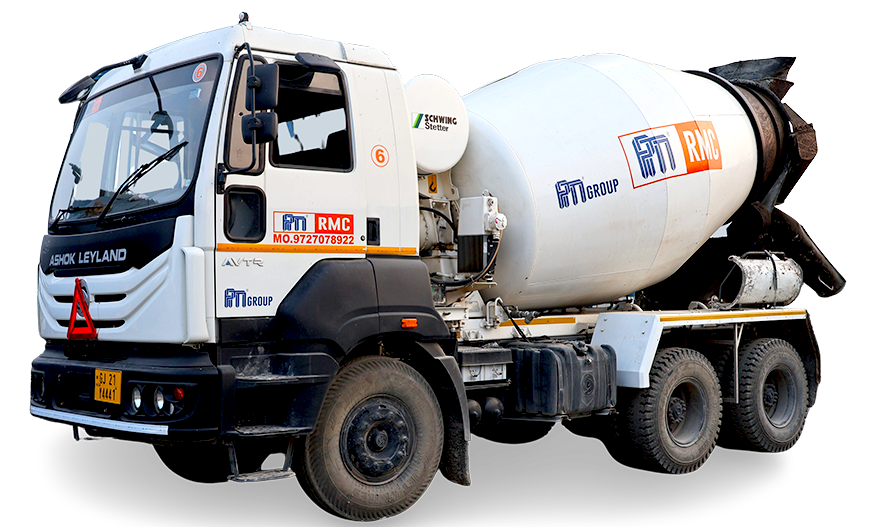
Ready-mix concrete is another major category for projects requiring controlled concrete production and scheduled site delivery. RMC can provide advantages in terms of production consistency and construction efficiency when the mix design, quality control, transportation, and placement processes are properly managed.
Pavers are commonly used for external areas such as walkways, driveways, commercial premises, roads, parking areas, and landscaping applications. Product selection should depend on expected loading, application, durability requirements, and site conditions.
01Aggregates, Sand and M-Sand for Construction Projects
Aggregates and sand should always be selected according to the project's technical requirements rather than simply based on availability or price. Different aggregate sizes have different applications, making correct selection important for concrete and infrastructure work.
M-Sand also requires attention to grading and production quality. A controlled manufacturing process can help improve consistency and suitability for construction applications. PM Group's aggregates and sand division states that it produces different aggregate sizes and manufactured sand for applications including ready-mix concrete, precast concrete, road construction, railway base preparation, and retaining walls.
For buyers, the key consideration should be whether the supplied material matches the required specifications and intended use.
02Cement, Bricks, Blocks and Reinforcement Materials
Depending on the supplier, construction procurement may also involve cement, masonry products, reinforcement materials, and other building products. These materials should be evaluated based on grade, specifications, manufacturer information, quality documentation, and project requirements.
For larger projects, suppliers that understand technical specifications can make procurement easier. Clear communication between the supplier, contractor, engineer, and site team helps ensure that the correct material is delivered for the intended application.
How to Choose the Best Construction Material Supplier in Surat?
There is no single supplier that is automatically the best for every construction project. The right choice depends on the project's material requirements, quantity, location, budget, timeline, and technical specifications.
A supplier should therefore be evaluated using practical criteria rather than selecting one solely because of a low quotation. Buyers should look at quality, availability, production capacity, delivery capability, experience, and overall reliability.
Check Quality, Certifications and Material Specifications
Quality should be one of the first factors considered when comparing construction material suppliers. Before ordering, buyers should understand the material specifications, applicable standards, testing process, and quality-control practices followed by the supplier.
Testing documentation can provide useful evidence that the supplied material meets the required specifications. For large projects, buyers may also require regular testing and documentation as part of their quality-assurance process.
PM Group states that its aggregates and sand operations have in-house testing facilities and quality-control processes. Its website also highlights certifications across its business operations.
However, certifications alone should not determine supplier selection. They should be considered alongside actual material quality, production consistency, technical specifications, and project experience.
Compare Pricing, Availability and Bulk Supply
Price comparison is an important part of procurement, but buyers should compare quotations on a like-for-like basis. Transportation, taxes, unloading, order quantity, delivery location, and other applicable charges can influence the final delivered cost.
Availability is particularly important for large construction projects. A supplier may offer competitive rates but may not have enough production or logistics capacity to fulfil recurring requirements. This can create delays and disrupt construction schedules.
Before placing a bulk order, confirm:
Material quantity and specifications
Delivery frequency and timeline
Transportation arrangements
Applicable additional charges
Bulk-order pricing and quotation validity
PM Group states that its aggregate operations include multiple quarries and a stated crushing capacity of 600 tonnes per hour, supporting high-volume material requirements.
Evaluate Delivery, Experience and Supplier Reliability
Material availability has little value if it cannot reach the project site when required. Reliable logistics and delivery coordination are therefore important factors when selecting a supplier.
This is particularly relevant for RMC, aggregates, and other high-volume materials where construction schedules may depend on continuous or scheduled deliveries. Buyers should evaluate whether the supplier has the infrastructure and operational experience required for the project's scale.
Supplier experience can also provide useful insight into their ability to handle different project requirements. PM Group states that it has almost three decades of experience in the construction-material industry and operates through Patel Aggregates & Sand, PM Pavers, and PM RMC.
Its RMC operation also states that technology is used for production transparency and ERP-based tracking from production to dispatch.
Construction Material Quality Checks Before Buying
Quality evaluation should begin before the material reaches the construction site. The project team should first define the required material specifications and then verify whether the supplier can consistently meet them.
For aggregates and sand, factors such as particle size, grading, cleanliness, moisture, and suitability for the intended application may need to be considered. For concrete, requirements can include mix design, strength, workability, and delivery conditions.
Documentation is also important because it provides traceability between the material ordered and the material supplied. Depending on the product and project, buyers may review specifications, test reports, batch details, invoices, and relevant certifications.
Delivered quantities and material condition should also be checked. A proper procurement and inspection process can reduce the possibility of receiving unsuitable or inconsistent materials.
Factors That Affect Construction Material Prices in Surat
Construction material prices can change depending on material type, grade, quantity, transportation distance, market conditions, production costs, and availability. Therefore, a single price should not be considered applicable to every project.
For bulk purchases, the delivered cost is often more meaningful than the basic material rate. Two suppliers may quote different prices but offer different transportation terms, delivery conditions, or order requirements.
When comparing quotations, buyers should ensure that they are comparing the same material specifications and quantities. Transportation, taxes, unloading, and other charges should also be clearly understood.
This approach helps project teams make decisions based on total procurement value rather than only the initial quoted price.
Why Local Construction Material Suppliers in Surat Can Be Beneficial
Working with suppliers that serve Surat and nearby areas can simplify communication and logistics. Local market familiarity can help suppliers understand common project requirements, transportation conditions, and delivery expectations.
For projects requiring frequent deliveries, efficient logistics can help maintain a smoother construction schedule. However, location should not be the only selection criterion. Quality, production capacity, technical capability, and reliability should remain the primary considerations.
The ideal supplier combines consistent quality, adequate supply capacity, dependable delivery, and project-specific support.
Why Choose PM Group for Construction Material Requirements?
PM Group provides construction-material solutions through its different business divisions, including Patel Aggregates & Sand, PM Pavers, and PM RMC. According to the company's website, the group has almost three decades of experience in the construction-material industry.
Its aggregates and sand division supplies multiple aggregate sizes and manufactured sand for applications including concrete, precast, roads, railways, retaining structures, and other construction requirements.
For project owners, contractors, and developers, these capabilities can make PM Group a relevant option when evaluating construction material suppliers in Surat for quality-focused and bulk material requirements.
Questions to Ask Before Choosing Construction Material Suppliers
Before finalizing a supplier, project teams should ask practical questions about product specifications, quality control, supply capacity, delivery, and pricing. This helps identify whether the supplier can meet the project's actual requirements.
Important questions include:
What material grades and specifications are available?
How is the material tested and quality-checked?
Can you handle bulk or recurring requirements?
What are the delivery timelines and transportation terms?
Are test reports or quality documents available?
What additional costs are included in the quotation?
A transparent supplier should be able to answer these questions clearly and provide the necessary information for an informed procurement decision.
Conclusion
Selecting the right construction material suppliers in Surat requires a balanced evaluation of quality, specifications, pricing, availability, production capacity, logistics, and supplier experience. Instead of choosing purely on the basis of price, construction companies should consider the complete value a supplier can provide throughout the project.
For projects requiring dependable aggregates, sand, pavers, and ready-mix concrete, PM Group brings together multiple construction-material capabilities supported by established operations and industry experience.Planning a construction project in Surat and need a reliable material supply partner? Contact PM Group to discuss your requirements and find the right construction material solution for your project.
Project Enquiry
If you are looking for dependable paving solutions for your next construction or infrastructure project, connect with PM Group to discuss your project requirements and identify a suitable paving solution.
Talk to Our Team